Wednesday, 21 September 2016

The redevelopment of Tillicks Cottage

Tillicks Cottage is a labourers cottage at Woodhayes Farm. It was built in 1957 in blockwork with a 50 mm cavity wall and concrete floors. We decided that it was time to update the cottage, make it larger so that it can house a small family and make it more energy efficient. we will be adding an extension in order to add an extra bedroom and have a larger sitting room. The Kitchen will also be enlarged and a new conservatory will be added. The House will also benefit from an air source heat pump with underfloor heating and an enlarged garden.

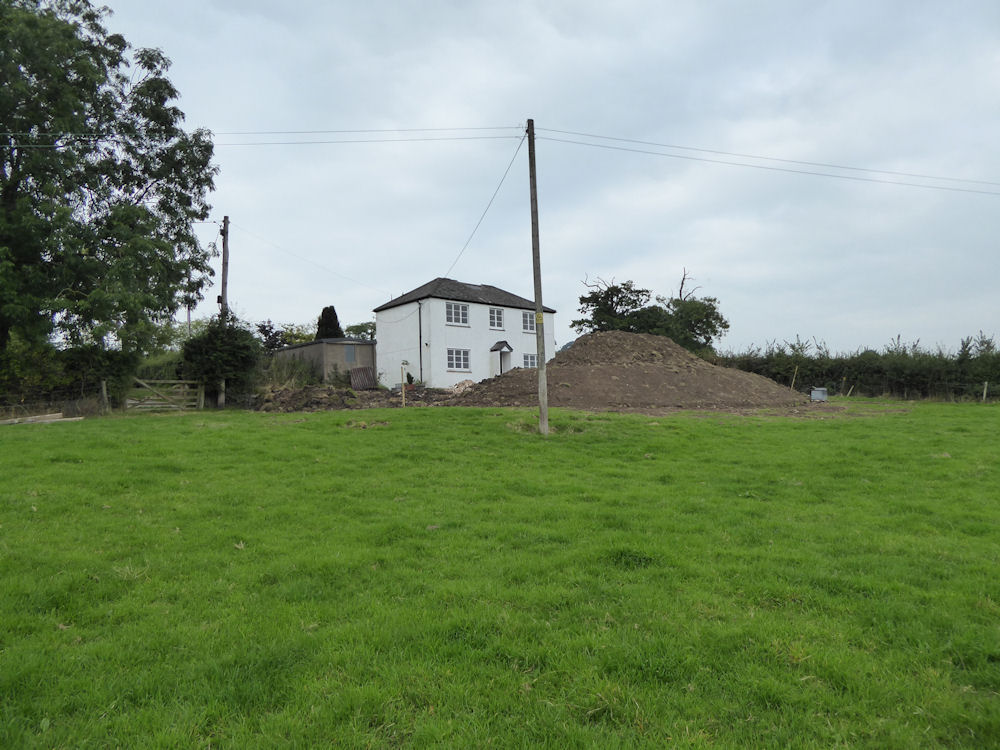
View of Tillicks Cottage earlier this Summer before work started


The new Ha Ha,  we have placed all the top soil and sub soil from the newly excavated areas in front of the cottage to make a new Ha Ha, this will give the cottage more garden space which will give a small family an area for recreation and out door space.


Another view of the Ha Ha , showing a heap of top soil which will be leveled at a later stage to go around the front of the house. The sub soil from the footings along with any rubble from the dismantled walls will be placed around the house and in a new soak away created to the left of the cottage.   


Dismantling some more walls. 


Part of the Kitchen Chimney and fire place is beginning to be dismantled, the wall is next to go allowing more space in the Kitchen.


Leveling part of the new Ha Ha , photo taken from upstairs.


Making space for the new extension.


The New Ha Ha leveled and ready for top soil , once the footings have been put in and walls are up.

Tapping into an Ancient Spring at Woodhayes

Woodhayes Farm lies at the edge of the Blackdown Hills, the farm's location is at the tip of this Blackdown Hills land mass,  that water appears in numerous places in the form of springs. "Spring Field" is a name given to the field where we have excavated a 9 ft deep trench , the trench is approximately 8 x 8ft square and in this trench we have placed 2 concrete rings placed on a bed of flint stones and gravel from which a plastic water pipe protrudes. Behind the concrete rings including  the lid and inspection hatch we have placed 5 tons of flint stones at the rear void between the concrete rings and the edge of the clay wall of the trench.  The purpose of this is to allow water to find its way from the source of the spring in order to fill the chamber of the  reservoir through the bed of flints and gravel.


View of the site of the spring in Spring Field Woodhayes Farm before work was done.


View of the site of the spring after work has been carried out.


The excavated area showing the concrete lid and inspection hatch of the new reservoir well located between the 2 trees.


A view of the site looking down to the field where the new trough will be located.


The site of the cattle trough now connected to the reservoir


This blackened ancient oak tree is an early piece of agricultural archeology , it was found imbedded in clay and mud , it is in all probability an item that was used to manage the spring water. The oak tree has a lid which is nailed (using hand made nais) over a deep channel aprox 20 cm wide and 20 cm deep and running for 3/4 of the length of the ok timber. At the wide end of the Oak timber there is a circular hole, presumably where the water entered. We have sent photos and details to the archaeology dept of Exeter University and we hope to hear back soon with a more detailed explanation.


An Oak tree showing the lid removed and revealing the gully.

Monday, 12 September 2016

We welcome four exciting artists to Woodhayes Gallery who are showing for 2 weeks as part of Devon Open Studios 2016.

We welcome four exciting artists to Woodhayes Gallery who are showing for 2 weeks as part of Devon Open Studios 2016. 


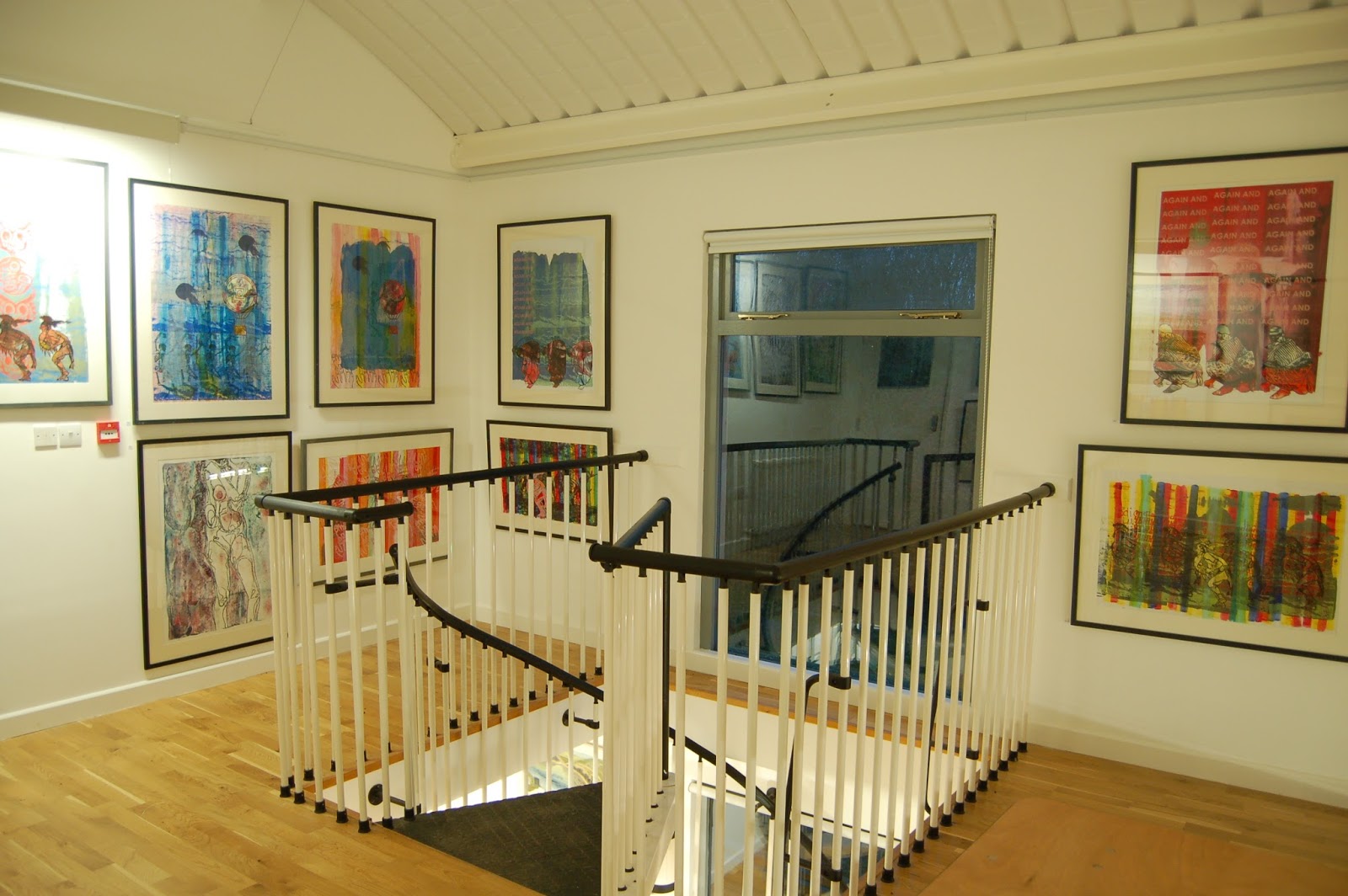
Gesture and Colour : 10 - 25 September, open 10am – 6pm
Part of Devon Open Studios ; Gesture and Colour is an exhibition featuring the work of the artists Joanne Brown, Trish Browne, Judith Lakeman Fraser and Zee Jones as part of Devon Open Studios. Four South West-based artists will come together to produce an inspiring new exhibition .‘Gesture and Colour’ as part of this year’s Devon Open Studios. A combined theme of vibrant colour and gestural mark making connects the group of artists. Their inspiration stems from the dramatic landscapes of the Jurassic coastline and the Devon countryside.


More Finds made at Woodhayes Farm by Scott and His Dad from Bristol


Above are some of the finds made over the course of a day and a half, they include numerous buttons, various coins,  a Beer Keg tap and some Buckles. We look forward to seeing Scott here again next year.

Friday, 20 November 2015

Inaugural exhibition at Woodhayes Gallery

November saw the culmination of many years' work - our inaugural exhibition at Woodhayes Gallery!

It has been a long build up. It was early 2011 when we first mooted the idea of a new exhibitions' space with the South West art community, who confirmed our suspicions that there was a lack of good exhibition venues for hire.

The conversion of the Dutch Barn started in 2013. By 2014 it was complete and we now had a purpose-built, contemporary exhibitions' space making the most of the spectacular light from the floor to ceiling windows and incorporating the very latest gallery lighting and hanging systems.

The inaugural exhibition : 'Metamorphosis' (7 -18 November) featured the work of two South West artists - Dick Hewitson and Maisie Parker who had hired the gallery space.

Dick Hewitson is a Dorset painter, mainly painting in oils, whose interpretations of landscapes range from contemporary figurative to abstract. After initial research in the field, creating rapid sketches in pencil, ink or charcoal, Dick returns to creat the artwork in his studio. He often incorporate charcoal marks into his oil paintings too. Colour is a significant aspect of his work, blending subtle colour mixes for his paintings. You can see more here : http://www.dickhewitson.co.uk/exhibitions.php
Walking Dorset - Dick Hewitson
Maisie Parker is an artist who works in mixed print media, although drawing is at the heart of her work. She explained "Drawing is a way of knowing, a mode of enquiry and a visual language. Life drawing is the source of all my print work and is ongoing. It is the most important part of my art."
Maisie Parker
The Private View was held on Saturday 7 November to much excitement and we have enjoyed the last few weeks and learnt much along the way. We have welcomed artists from across the region throughout the exhibition to view the space, so exciting times are ahead!


Thursday, 19 November 2015

"THE MAN WHO CAN SEE BACK IN TIME........." Archies visit to Woodhayes.


Imagine walking down the High Street of your town and being able to see not just the people of the present around you, but people from the past - in detail. Roman legionaries on a drunken day off, crinolined Victorian ladies going about their shopping, Stone Age men in skins sharpening their flints for a mammoth hunt – all mingling with the people of today, and all of them completely unaware that their time periods are over-lapping, and it’s happening right under their noses.

But, somehow, you’re aware - you always have been. You can see them all as you walk down that street, going about your own business.  And these people from the past, they can see you, too, and want to talk to you, to tell you their stories, giving you information about their life and times that always seems to check out, sometimes showing you answers to questions that have puzzled historians for years – and sometimes even revealing that we’ve got history wrong.

It would make a great story, wouldn’t it – the extraordinary psychic who gets answers to history’s mysteries in ways no-one can understand? Because of course, this could only be a story, couldn’t it? It couldn’t happen in reality.   Except for one man, it does.

WHO IS ARCHY LEE?

This is the story of a Somerset man with an amazing gift:  A salt of the earth, funny, colourful character, ARCHY LEE paints detailed pictures with the actual words of the people who once lived on the land or in the buildings where we live and work now
He describes their trades, their homes, their garments, their smells - and recounts the tittle-tattle and revelations they tell him.  Seemingly able to step outside time, he’s met up with all kinds of people from different eras, ranging from members of the Lost Legion to Henry VIII, from anonymous monks to President Kennedy – and they’ve all had fascinating facts to reveal, some of which have the potential to re-write history.  Archy is regularly remarkably accurate with what he reports. And yet he is no historian and has no prior knowledge of the people and times he’s ‘seeing’ and reporting.  He doesn’t possess a computer, and has no interest in using one. Yet much of the information he gleans is verifiable - although very often it takes an expert researcher considerable time and effort to confirm it. Other material he reports is tantalising and contentious, challenging what we think we know about the past. His insightful, humorous and engaging talent is quite extraordinary and probably unique. He has many fans and has featured in print & on radio.


read about Archie's visit to Woodhayes and what he found here :


Friday, 25 September 2015

Oak and Sweet Chestnut Timber Milling

There's nothing like using timber which has grown for 100's of years at Woodhayes for your own use. We have a project to put up a post and rail fence around an extended garden to Tillicks Cottage the farm labourers cottage in order to provide more garden to the Cottage. We did not have to look far for timber as we had already extracted a lot of timber from Crownall Wood this summer but there was also a very large dead parkland oak tree. We contacted Francis Huffman from Honiton Hardwoods who collected the timber we wanted to be used for 180 meteres and rails and 32 x  2 meter posts. The following photos show the process and what turned out to be a big surprise.


Multiple Timber Trunks extracted from Crownall Wood, including Ash, Sweet Chesnut, Oak ad Sycamore. 


Cross section of an Ash Tree


Francis Lifting Large Oak Timber trunk into position for Milling.


Oak Trunk edges closer to Timber Milling bench


Francis prepares large Oak Trunk for cutting


First Slice to take off outer section of the Trunk


This is what we found a treasure of oak design showing Wavey oak grains and cat's paws or Pippy Oak, so this oak was to good for posts, so we decided to have 1- 1.1/2 inch planks made which we will use for kitchen work tops for the new kitchen we plan for Tillicks Cottage


Another image showing the cat's paws, this type of wood makes £40-50 per cubic foot at British Hardwoods. so we were right to have this wood made into planks.


Francis making more cuts to the main oak Trunk.


The Oak Boards start to stack up , note that we have put wooden dividers between each plank to allow for circulation of air to help with the drying. Drying takes approximately 1 year per inch.


here are posts being made from the heart of the Trunk, note some rot at the end of the post.


A Sweet Chestnut is up next, this wood is as hard as oak but more prone to splitting, so one needs to be careful when cutting the trunk.


Another view of the Sweet Chestnut ready to be sawn.


Here is the first Cut


Here is the timber beautifully stacked back at the farm, note that the timber posts, rails and planks have spaced out dividers to allow for air circulation helping with the drying process. The wood will need 2-3 years to dry, it will then be ready to be used. The Timber planks will have to be sanded to leave a polished surface for the kitchen work tops, we will revisit that process in a few years from now.